



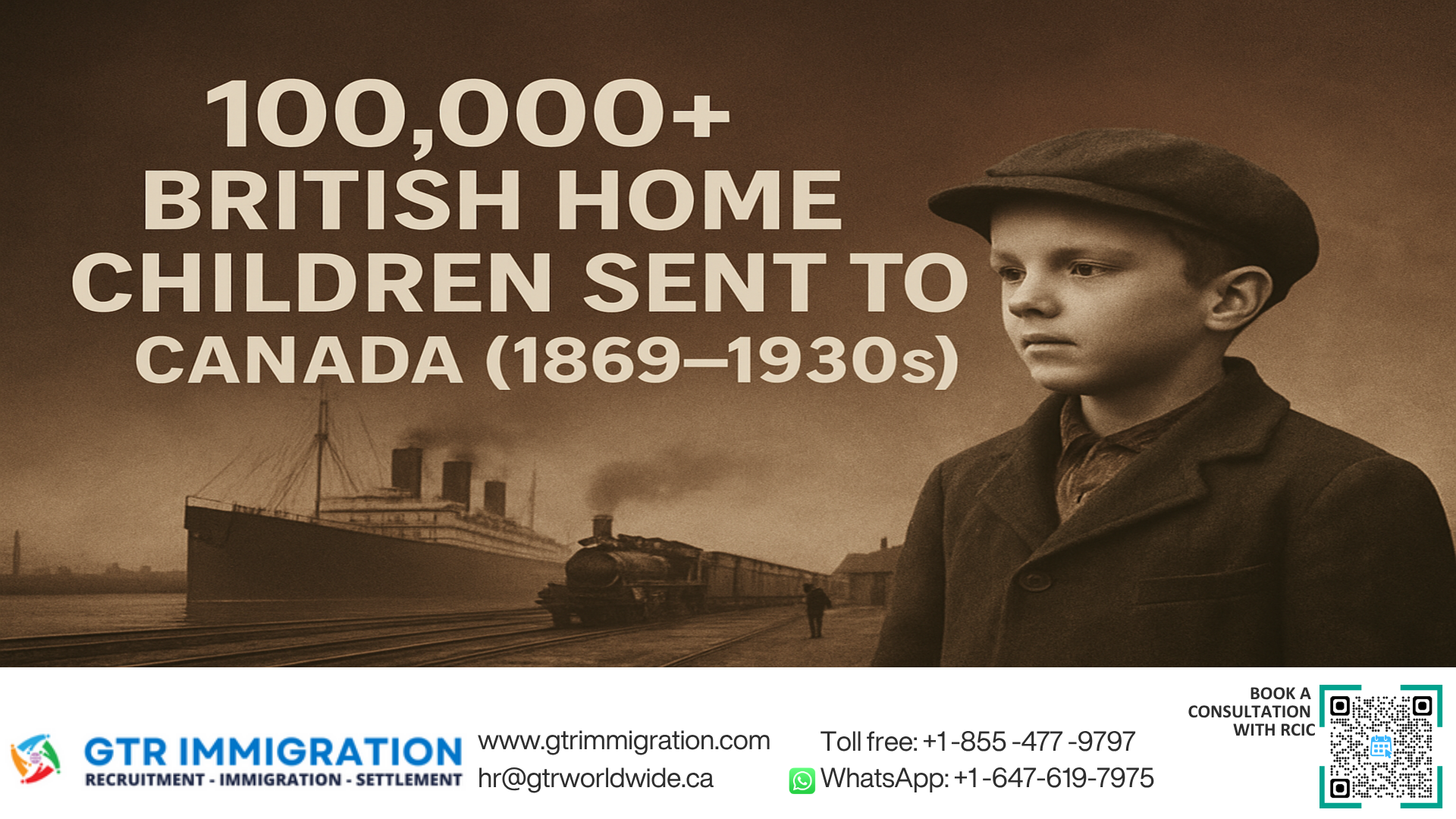
100,000+ British Home Children Sent to Canada (1869–1930s)
British Home Children and Canadian Citizenship: How 1947, Bill C-3 and family records may mean you’re already Canadian
Why this update matters right now
Descendants of Britain’s child emigration programs—the British Home Children—may already be Canadian because of legal changes tied to January 1, 1947 and later statutory fixes. If your family story mentions a child sent from Britain or Ireland to a receiving home or a farm in Canada, that detail could start a citizenship claim. Citizenship can exist by operation of law without anyone ever having applied, but you will usually need documentary proof to obtain a Canadian passport or other official proof.
How a historical migration became a modern citizenship issue
From about 1869 to the late 1930s, charities, churches and local poor-relief boards in Britain arranged for children to be sent to Canada. Library and Archives Canada (LAC) estimates more than 100,000 children were sent in that period; the UK National Archives, counting only to 1930, reports about 80,000. Sending agencies included Maria Rye, Annie Macpherson and Dr. Barnardo’s Homes; receiving homes included places such as Fairknowe (Brockville) and Marchmont (Belleville). At the time these children arrived, people in Canada were British subjects; separate Canadian citizenship was created on January 1, 1947. What happened in 1947 is the legal pivot that can determine whether descendants qualify as citizens today.
What changed in 1947 and afterward
When Canada’s first Citizenship Act took effect on January 1, 1947, some British subjects living in Canada became Canadian citizens automatically, while others did not. In 2015 Parliament corrected part of that gap by recognizing some British subjects who were “ordinarily resident” in Canada on that date as having citizenship from 1947 (with certain exclusions). Separately, for decades Canada applied a “first-generation limit” to citizenship by descent. Bill C-3, which came into force on December 15, 2025, removed that barrier for many families and expanded the ability to claim citizenship across multiple generations born outside Canada. The practical result: if you can document an unbroken chain from a Home Child ancestor who meets the 1947 residency tests, you may now be able to claim citizenship.
Who might be affected
Many families will recognize a pattern: a grandparent or great‑grandparent who “came from Britain as a child,” a farm placement in Canada, or a relative who rarely talked about their past. A 2010 federal estimate suggests millions of Canadians descend from former Home Children, and some descendants living abroad may be Canadian by operation of law.
Things to watch for:
– Whether the Home Child was “ordinarily resident” in Canada on January 1, 1947.
– Whether you can document each generation from that ancestor to the claimant.
– Whether any ancestor renounced citizenship or otherwise changed status (which can break the chain).
– Births before 1947 and ancestors who died prior to statutory recognition require individual assessment.
Practical steps to check a possible claim
Begin with family interviews and archival searches. The key facts you’ll want to establish are arrival and placement in Canada, residence on January 1, 1947, and an unbroken descent chain.
Start with family memory
– Ask oldest relatives for names, ship crossings, receiving homes, agency names (Barnardo, Quarrier, Macpherson, Middlemore, Maria Rye), and any farm or town names.
Search archives and records
– Search LAC’s Home Children records by name; entries often show ship, arrival date and sending agency. Passenger lists can confirm the crossing.
– Use local and national vital records, census and passenger records to show presence and residence in Canada.
Prove residence on January 1, 1947
– Establish whether the ancestor was “ordinarily resident” in Canada that day using census, vital records, and other residency evidence. IRCC holds many citizenship files from the era that can be relevant.
Build the descent chain
– Collect birth certificates or other acceptable documents for each generation. IRCC provides guidance on alternative evidence when records are missing. Placement or adoption records alone do not establish citizenship.
Common complications
– Name variations, missing records, mobility across borders, renunciations, and births before 1947 can all complicate claims. Complex or unclear cases often benefit from an immigration lawyer or a professional experienced with historical records and citizenship law.
Realistic outcomes
If you can show a Home Child ancestor was “ordinarily resident” in Canada on January 1, 1947 and document an unbroken descent to you (or another relative), you may already be a Canadian citizen by operation of law. You will typically need a Proof of Citizenship certificate from IRCC to exercise rights such as obtaining a Canadian passport. Canada permits dual citizenship, so claiming Canadian status does not automatically affect other nationalities.
Checklist: evidence to gather before applying for proof of citizenship
– Home Child archival entry or passenger list showing crossing and receiving home.
– Records showing the ancestor lived in Canada on January 1, 1947 (census, vital records, residency documents).
– Birth records for each generation linking the ancestor to the claimant.
– Any IRCC or citizenship files related to the ancestor.
– Details of any known renunciations or legal steps affecting citizenship.
Where to start
Talk to the oldest relatives, search LAC’s Home Children database, and collect vital records showing residence on January 1, 1947 and birth records across generations. If you hit gaps or legal questions, consider professional help. Document carefully: spellings and dates can vary, and each link matters for a successful claim.
🚀 Start Your Canada Immigration, Jobs & Settlement Journey Today
Need help with Express Entry, PNP, LMIA, Work Permit, Study Permit, Visitor Visa, Family Sponsorship, Canada Jobs, Recruitment, or Settlement guidance? Book a paid consultant: https://gtrworldwide.zohobookings.com/#/greentechresourcesworldwidecanadawebsite
📱 WhatsApp / Call: +1 647 619 7975 / + 1 639 560 3180
🌐 Website: www.gtrimmigration.com
💼 Canada Job Site: www.ciccanadajobs.com
📊 Job Analytics & Labour Market Insights: www.jobmaze.ca
🔗 LinkedIn: www.linkedin.com/in/manojcanada
📘 Facebook: https://www.facebook.com/gtrimmigrationcanada
▶️ YouTube: https://www.youtube.com/@GTRImmigration
📸 Instagram: https://www.instagram.com/gtr_immigration
#BritishHomeChildren #CanadianCitizenship #BillC3 #1947Citizenship #FamilyHistory #ImmigrationCanada #ProofOfCitizenship