



British Columbia and New Brunswick Open More Work Permit Opportunities Under TFWP
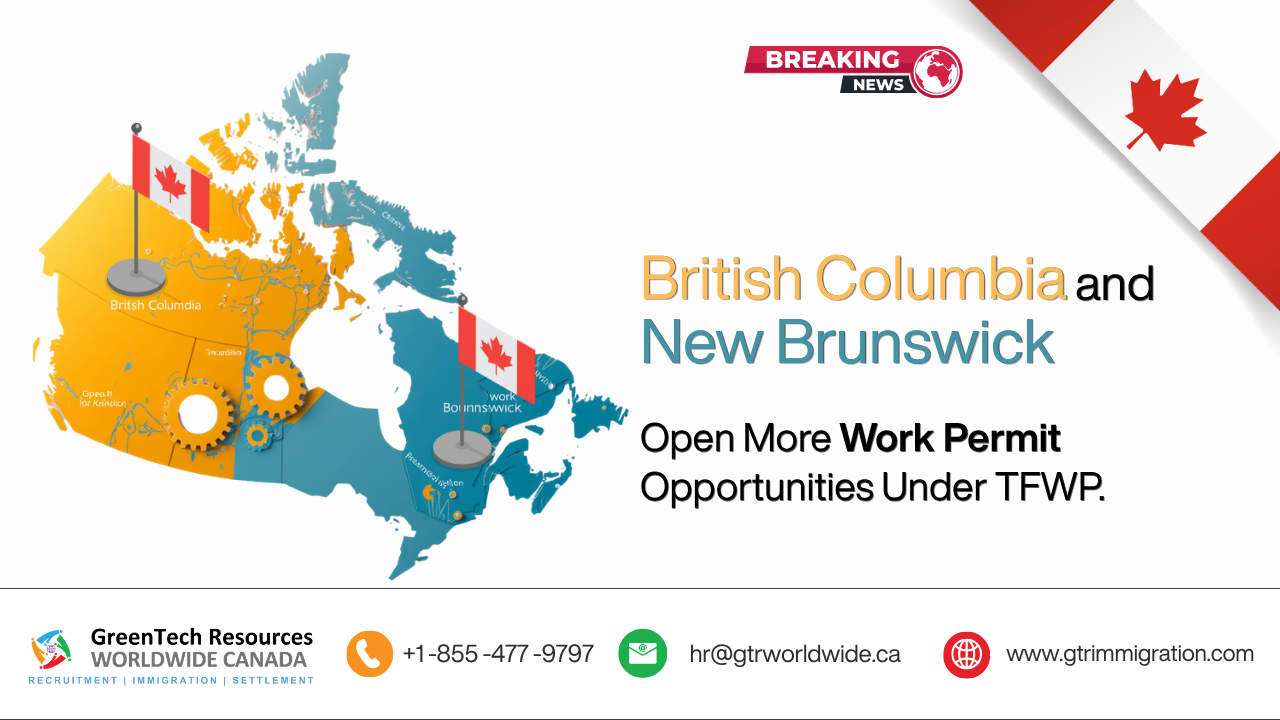
Rural employers in British Columbia and New Brunswick are now benefiting from increased flexibility to hire low-wage foreign workers under new temporary measures introduced through Canada’s Temporary Foreign Worker Program.
These federal measures, in effect from April 1, 2026, to March 31, 2027, aim to support rural businesses struggling with labour shortages, while still requiring employers to prioritize hiring Canadian citizens and permanent residents first.
Overview of the New Measures
The government has introduced two key flexibilities for eligible rural employers:
1. Retaining Existing Workforce Proportions
Employers can maintain their current percentage of low-wage temporary foreign workers—even if it exceeds the standard 10% limit.
2. Increased Cap to 15%
Employers may raise the share of low-wage foreign workers from 10% to 15%, depending on provincial participation.
These provisions apply only to new LMIA applications submitted after each province’s implementation date. Applications filed before that date are not eligible.
British Columbia’s Approach
Beginning May 4, 2026, British Columbia has adopted a more conservative option.
- Employers in rural areas can retain their existing proportion of low-wage foreign workers, even above the usual cap
- The province has not adopted the 15% cap increase
This approach helps businesses maintain workforce stability without significantly expanding their reliance on low-wage foreign labour.
New Brunswick’s Strategy
Starting April 23, 2026, New Brunswick has chosen a different path.
- Employers can increase their low-wage foreign worker cap to 15%
- The retained proportion option is not available
This gives businesses greater flexibility to hire additional workers, particularly in sectors like agriculture, food processing, hospitality, and manufacturing where labour shortages are more acute.
Eligibility Requirements
To qualify for these temporary measures, employers must:
- Operate in a rural area (outside a Census Metropolitan Area)
- Meet all standard Temporary Foreign Worker Program requirements
- Demonstrate efforts to recruit Canadians and permanent residents first
- Submit a new LMIA application during the policy period
Certain industries already allowed a 20% cap will not be affected by these changes.
Why This Matters
With these updates, British Columbia and New Brunswick join provinces like Nova Scotia, Manitoba, and Quebec in supporting rural workforce needs.
The broader objective is to:
- Strengthen rural economies
- Address persistent labour shortages
- Help businesses maintain operations while staying compliant with labour regulations
For both employers and foreign workers, this creates more structured and accessible employment opportunities in rural Canada.
Conclusion
These temporary measures mark another important shift in Canada’s 2026 immigration and labour strategy. Rural employers now have greater flexibility to address staffing challenges, but must still meet strict compliance requirements.
Businesses should carefully evaluate their eligibility before applying, while workers should stay informed about participating provinces and emerging opportunities. As Canada continues refining its immigration policies, these rural-focused initiatives may play a key role in long-term workforce planning.