

Canada Immigration Update: Ontario to Replace All OINP Streams by May 2026
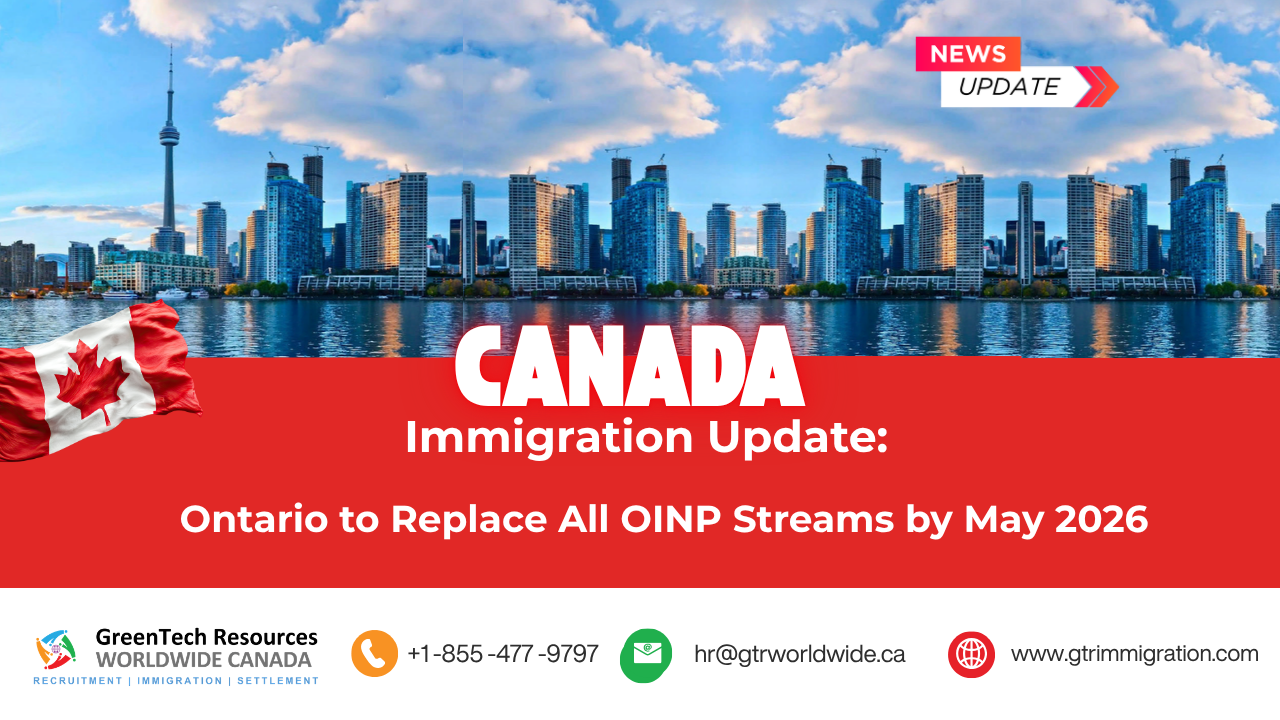
In a significant policy shift, the province of Ontario has announced plans to completely restructure its immigration system under the Ontario Immigrant Nominee Program. Expected to take effect by May 30, 2026, these changes represent one of the most comprehensive provincial immigration reforms in recent years.
Rather than making minor adjustments, Ontario intends to eliminate all existing immigration streams and replace them with a new, more targeted system. This marks a major turning point for immigrants, international graduates, and employers seeking permanent residence pathways in the province.
A Complete Reset of Ontario’s Immigration System
One of the most notable aspects of this reform is the full removal of current OINP streams, including:
- Employer Job Offer streams
- International Student streams (Master’s and PhD graduates)
- Human Capital streams linked to Express Entry
Instead of modifying these pathways, Ontario is opting for a complete reset. This approach allows the province to redesign eligibility criteria, selection methods, and program structures without limitations from the existing system.
Why Ontario Is Making These Changes
The overhaul is driven by several key factors:
1. Labour Market Demands
Ontario continues to face shortages in sectors such as:
- Healthcare
- Skilled trades
- Technology
The current system has been viewed as too broad and not responsive enough to specific workforce needs.
2. Limited Nomination Allocations
Provinces receive a fixed number of nominations from the federal government. A more targeted system helps Ontario:
- Maximize economic impact
- Prioritize job-ready candidates
- Improve selection efficiency
3. Program Integrity Concerns
Issues such as fraudulent job offers have led to plans for stricter controls, including:
- Enhanced employer verification
- Stronger documentation requirements
- Increased compliance monitoring
4. Alignment with Federal Trends
The changes align with national immigration strategies led by Immigration, Refugees and Citizenship Canada, particularly the shift toward category-based selection. Ontario is expected to adopt a similar approach at the provincial level.
What the New System May Look Like
Although full details are still pending, several features are expected:
Targeted Immigration Streams
New pathways will likely focus on priority sectors such as:
- Healthcare
- Technology
- Skilled trades
- Regional and rural communities
Targeted and General Draws
Ontario may conduct both:
- Targeted draws based on occupation or region
- General draws for broader applicant pools
Stronger Employer Involvement
Employers are expected to play a larger role, including:
- Pre-approval requirements
- Business verification
- Ongoing compliance obligations
Focus on Job-Ready Candidates
Applicants will likely need:
- Relevant work experience
- Required licensing (if applicable)
- Immediate employability
Impact on Applicants
These changes bring both opportunities and challenges:
Limited Window for Current Applicants
Candidates eligible under existing streams should consider applying before May 2026, as:
- Processing timelines may shift
- It is unclear if current applications will be protected
Increased Competition
The new system is expected to be more selective, with:
- Fewer invitations
- Higher eligibility thresholds
- Greater focus on specialized skills
Greater Role of Occupation
Applicants in high-demand fields (e.g., healthcare, trades) may benefit from:
- Faster selection
- Lower thresholds
- Dedicated pathways
Importance of Employer Connections
Job offers may become a key requirement, making employer relationships more critical than ever.
Implications for Employer
The reform also reshapes the role of employers:
More Responsibility
Employers may need to:
- Actively participate in the immigration process
- Provide detailed documentation
- Meet stricter compliance standards
Better Access to Talent
In return, they may benefit from:
- Faster hiring processes
- More targeted recruitment
- Improved alignment with labour shortages
Higher Compliance Risks
Stronger oversight may lead to audits and penalties for non-compliance.
Strategic Advice for Candidates
To adapt to these changes:
- Apply early if eligible under current streams
- Focus on in-demand occupations
- Gain relevant certifications or Canadian experience
- Build connections with Ontario employers
- Stay updated on official policy announcements
A Shift Toward Precision Immigration
Ontario’s overhaul reflects a broader global trend in immigration policy. The focus is shifting from:
- Broad accessibility and high intake to:
- Precision, economic impact, and labour market alignmen
This “just-in-time” immigration model prioritizes candidates who can contribute immediately to the economy.
Conclusion
Ontario’s decision to revamp the OINP marks a defining moment in Canada’s immigration landscape. By replacing existing streams with a more targeted, employer-driven system, the province aims to better address labour shortages and economic priorities.
For applicants, adaptability will be key. Whether applying under current streams, upgrading skills, or securing job offers, those who align with Ontario’s evolving priorities will have the strongest chance of success as the new system takes shape in 2026.