



Millions of Americans May Be Secretly Eligible for Canadian Citizenship
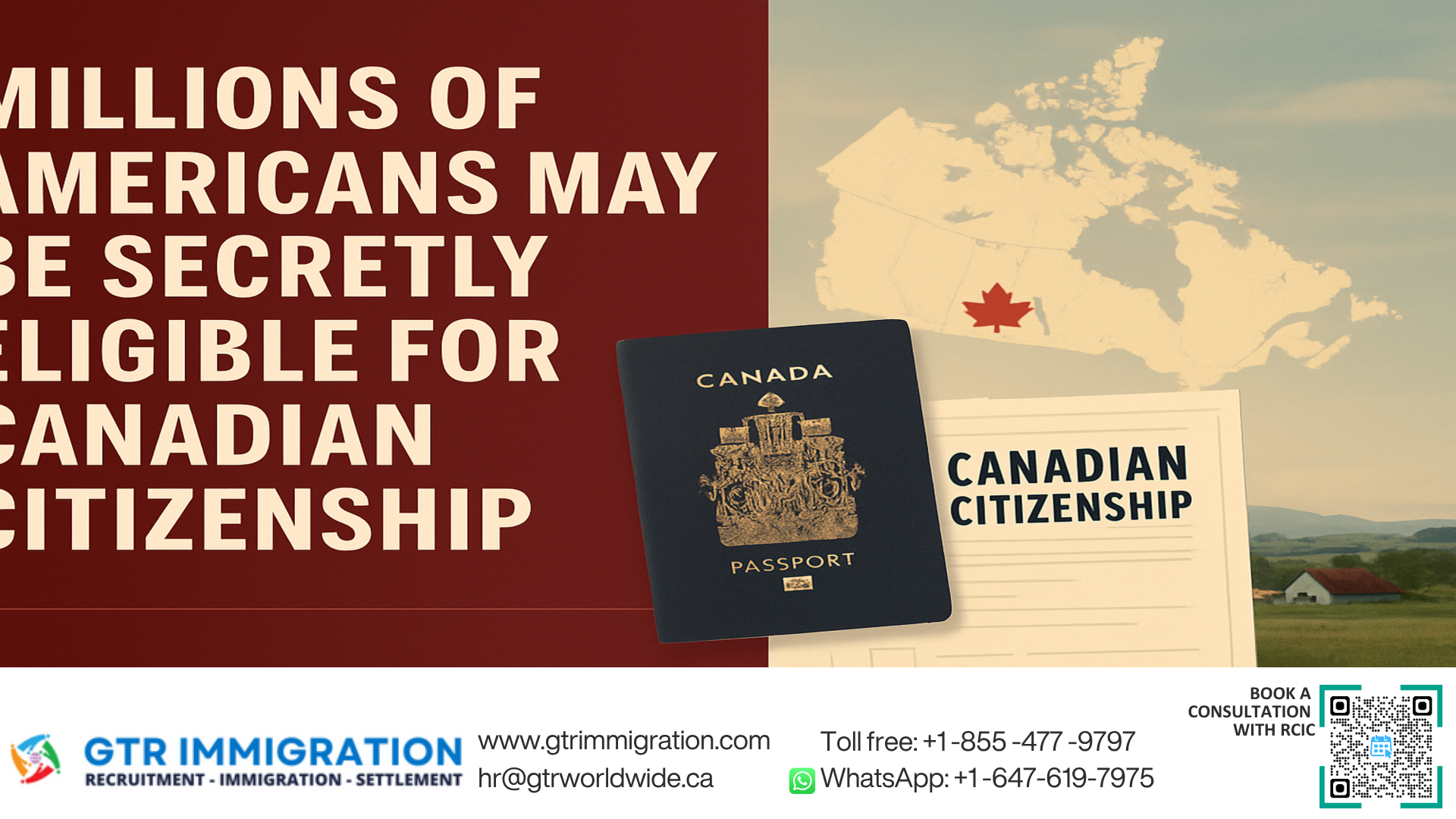
Canadian citizenship by descent: who in the United States may already be a Canadian — and how to find out
What changed and why it matters now
Bill C-3 removed Canada’s long-standing “first-generation limit” on citizenship by descent. That means many Americans who can trace an unbroken line to a Canadian ancestor—even if that ancestor is several generations back—may already be Canadian by law. If you were born before December 15, 2025 and can document the lineage, you’re not applying to become Canadian; you’re applying for a certificate that proves an existing status. Millions of people live in families or regions where historic migration from Canada was common, yet many never make the connection.
How the old rule blocked many descendants
Until this change, citizenship by descent was normally limited to one generation born abroad. A person born outside Canada to a Canadian parent could claim citizenship, but grandchildren and later generations born abroad were generally excluded. That rule cut off people whose Canadian connection traced back to great-grandparents or earlier—even when family memory hinted at Canadian origins.
Why removal of the limit expands eligibility
With the first-generation limit removed, the number of qualifying descendants grows significantly. For example, a teacher in Ohio whose great-grandmother was born in Quebec and moved to Michigan as a child would have been excluded under the old rule but may now qualify— and that potential citizenship could extend to her children, provided the documentary chain can be established.
Regions and migration patterns that hide Canadian roots
Certain U.S. regions were primary destinations for emigrants from Canada and therefore contain more potential claimants:
– New England (large Quebec-to-New England migration to textile mills between 1840 and 1930)
– The Upper Midwest (Michigan, Minnesota, Wisconsin)
– Louisiana and other smaller pockets of settlement
Over generations many records were lost or changed and surnames were often anglicized, which can hide the connection.
Clues that often point to eligibility
Two common signals to check are geography and surnames.
– Geography: family roots in New England, the Upper Midwest, Louisiana or similar migration destinations are worth investigating.
– Surnames: some names strongly suggest Canadian origins. Examples cited include Tremblay and Ouellet (which the source noted as having particularly high statistical association), and even common names like Roy or Desjardins. Anglicized surnames such as White, King, Wood, Carter and Mayhew can mask a French‑Canadian original. Dit names (traditional alternate family names) can also hide a connection.
These are indicators, not proof. They point you where to look; they do not by themselves establish citizenship.
Why official estimates probably undercount eligible people
Published estimates already show large eligible populations in parts of the U.S.—for example, the source suggests New England may include roughly one in four people who are eligible, with Connecticut alone estimated at about 300,000 residents. Those figures likely undercount the true number because records have been lost, names anglicized, and families dispersed over time.
Growing interest and administrative pressure
The law change has driven a surge in records requests. Quebec’s archives reported roughly a 3,000% jump in requests for vital records over the past year, most from Americans. Processing for a proof of citizenship certificate currently takes about 15 months, and demand is increasing—expect longer wait times and plan accordingly.
Who is most likely to be affected
People most likely to benefit include:
– Descendants of Quebec-born ancestors who emigrated to New England or the Upper Midwest, especially where surnames were anglicized;
– Families with a half-remembered story about a relative born in Quebec or a move from Quebec to the U.S.;
– Residents of states cited as hotspots (for example, Connecticut, Vermont, New Hampshire);
– Descendants of migrants who left Canada roughly between 1840 and 1930.
Practical benefits and motivation to apply
If you qualify, you are already a Canadian citizen; the application is for a certificate that confirms that status. A certificate enables citizen rights such as obtaining a Canadian passport and other legal protections and entitlements associated with citizenship. That explains the surge in record requests and applications.
How to decide whether to investigate your family line
If several clues point north, consider these steps:
– Start with family geography and stories.
– Examine surnames and possible anglicizations or dit names.
– Gather vital records (birth, marriage, death, parish registers) that link each generation.
– Use a quick eligibility check or preliminary tool to decide whether to pursue formal archival research.
Obstacles applicants should expect
– Lost or altered records and anglicized names can break the documentary chain.
– Processing times are currently long (about 15 months) and may increase.
– Assembling an unbroken line across generations requires careful, sometimes time-consuming research.
What to watch for next
– Expect longer wait times when ordering documents from provincial repositories.
– Administrative backlogs may grow as more people apply.
– Collect as many primary documents as possible before applying to reduce delays.
Final practical checklist
– Compile known family names, dates and places of birth/marriage/death.
– Look for ancestors born in Quebec or other Canadian provinces and trace their movements.
– Search for records that link each generation to the next; the application requires an unbroken documentary chain.
– Allow for roughly 15 months of processing once you submit an application for proof of citizenship and anticipate higher demand.
– If unsure, use a preliminary eligibility tool or seek professional guidance to determine whether to invest time in archival research.
🚀 Start Your Canada Immigration, Jobs & Settlement Journey Today
Need help with Express Entry, PNP, LMIA, Work Permit, Study Permit, Visitor Visa, Family Sponsorship, Canada Jobs, Recruitment, or Settlement guidance?
📱 WhatsApp / Call: +1 647 619 7975 / + 1 639 560 3180
🌐 Website: www.gtrimmigration.com
💼 Canada Job Site: www.ciccanadajobs.com
📊 Job Analytics & Labour Market Insights: www.jobmaze.ca
🔗 LinkedIn: www.linkedin.com/in/manojcanada
📘 Facebook: https://www.facebook.com/gtrtimmigrationcanada
▶️ YouTube: https://www.youtube.com/@GoWithGoswami
📸 Instagram: https://www.instagram.com/gtr_immigration
#CanadianCitizenship #CitizenshipByDescent #BillC3 #QuebecMigration #CanadianPassport #DualCitizenship #ImmigrationUpdate