



New Hampshire Leads the Way: One in Three Residents May Hold Dual Canadian‑U.S. Citizenship After 2025 Law Change
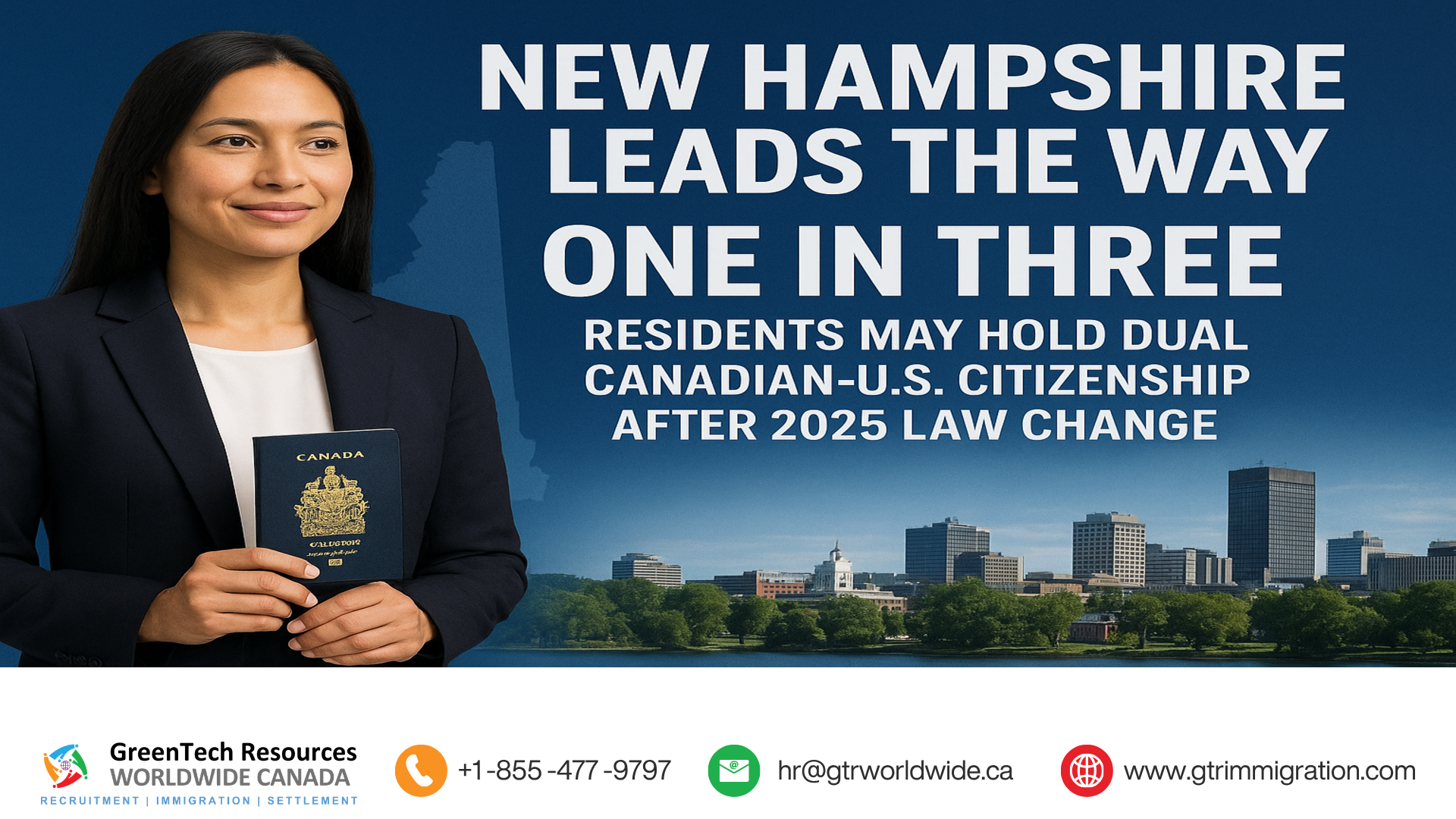
Canadian citizenship by descent: millions in New England newly eligible after December 15, 2025 law change
On December 15, 2025, Canada removed the first-generation limit on citizenship by descent, a policy shift that immediately expanded eligibility for proof of Canadian citizenship to millions of people in the United States—especially in New England. For Americans who can trace an unbroken line of descent to a Canadian-born ancestor, the change allows them to apply for a proof of Canadian citizenship certificate from IRCC and, subsequently, a Canadian passport. The update matters because it turns family history into a practical travel and citizenship option for many who never considered Canada a realistic option before.
What changed and why it matters
The amendment to Canada’s Citizenship Act eliminated the restriction that had limited the transmission of Canadian citizenship by descent to a single generation born abroad. Under the new rule, descendants beyond that first generation may now be considered Canadian citizens if they can document continuous descent from a Canadian-born ancestor. That proof of citizenship certificate is the official record IRCC issues to confirm status, after which applicants may apply for a passport.
This is more than a technical fix. For people with roots in provinces such as Quebec, the change converts genealogical connections into legal rights. Processing for proof of citizenship applications currently runs at roughly one year; Canadian passports follow in about 10 to 20 business days once the certificate is issued. Because the certificate requires certified civil documents at each generational step—birth, marriage, death records—most applicants will find the research and document collection to be the most time-consuming part of the process.
Historic migration explains the regional impact
The largest pool of potential new citizens in the United States is concentrated in New England. Between 1840 and 1930, nearly one million French Canadians left Quebec and settled in the Northeastern U.S. in a movement historians call the Great Hemorrhage. They established communities in mill towns and border cities where labour demand was high, and their descendants remain in those states today.
Self-reported Canadian ancestry in U.S. Census Bureau data for 2024 highlights the regional pattern:
- New Hampshire: 8.06%
- Vermont: 7.59%
- Maine: 7.00%
- Rhode Island: 4.05%
- Massachusetts: 3.40%
Those figures understate the likely true numbers. Genealogists and local historians estimate that many more people have Canadian roots but are unaware of them—possibly three to four times the census counts in some communities—because family stories fade or surnames were anglicized over generations.
Who in New England is most likely affected
New Hampshire and Vermont stand out. Manchester, New Hampshire, attracted large numbers of Quebec migrants; by 1910 genealogist Kim Kujawski reports about 23,000 French Canadians were living in Manchester, representing 38 percent of the city’s population. Local legacy and dialects still reflect that heritage. In Vermont, Ed McGuire of the Vermont Genealogy Library estimates around 30 percent of current residents have French-Canadian ancestry, even though the 2024 census shows 7.59 percent self-reporting Canadian ancestry. Maine’s Lewiston long retained a strong Franco-American identity, with neighbourhoods called Little Canada persisting into the present.
Rhode Island’s Woonsocket once had a French-Canadian majority and remains home to the American-French Genealogical Society, which holds an extensive collection of regional vital records—useful for anyone tracing lineage back to Quebec. Massachusetts historically hosted large numbers of Franco-Americans; surname clues and local church registers can point applicants toward records that establish descent.
Practical steps for prospective applicants
Begin with family research. Oral history, church baptismal records, and older civil documents are often the most direct path to a Canadian-born ancestor. Surnames that sound French or were translated to English over time (examples historically include Charpentier to Carpenter or Leblanc to White) can be an indicator worth pursuing.
Gather certified copies of:
- Birth certificates at every generational link
- Marriage certificates where applicable
- Death certificates where required to close generational links
Each document must show the lineage that connects the applicant to the Canadian-born ancestor. Tracking down compliant copies can take months, especially for records from small towns or older civil registries.
Use available tools and local resources. CanadaVisa’s citizenship by descent eligibility checker can help prospective applicants assess whether they meet the basic criteria, while local genealogy societies—such as the American-French Genealogical Society in Woonsocket—often maintain targeted collections that speed research.
When the paperwork is ready, submit the proof of citizenship application to IRCC. Expect processing on the order of one year; plan passport timing accordingly. Many applicants are pursuing a Canadian passport as a contingency or travel advantage without intending to emigrate.
What applicants should watch for
Documentation completeness is the key gatekeeper. Applications are commonly delayed or denied because a generational record is missing, illegible, or not an accepted certified copy. Applicants should confirm the exact document standards required by IRCC for birth, marriage, and death records and allow time to obtain notarized or apostilled copies where necessary.
Tracking timelines helps. The roughly one-year processing time for proof of citizenship means applicants who need a passport on a certain schedule should begin document collection early. After certificate approval, passport issuance typically follows within two to four weeks.
Be aware of differences between self-reported ancestry and legal eligibility. Census self-identification understates many family stories; conversely, self-reported Canadian ancestry does not by itself equal legal status. Legal citizenship requires tracing direct, continuous descent from a Canadian-born ancestor and satisfying IRCC’s documentary standards.
What this change means for applicants and families
For descendants of Quebec migrants, the policy reversal transforms dormant family history into a practical legal benefit: easier cross-border travel, access to Canadian consular services, and the formal status that comes with a passport. It may also influence planning for education, work, and retirement options for those who wish to live in Canada in the future.
Given the documentation requirements and processing times, successful applicants will generally be those who combine family knowledge with patient record-gathering and careful application submission. The law does not require applicants to move to Canada; many are applying simply to secure an additional passport or to maintain family ties.
Key takeaways
- On December 15, 2025, Canada eliminated the first-generation limit on citizenship by descent, opening eligibility to more descendants of Canadian-born ancestors.
- New England is a focal area because of the Great Hemorrhage when nearly one million French Canadians migrated to the Northeastern U.S. between 1840 and 1930.
- U.S. Census self-reported Canadian ancestry (2024) is highest in New Hampshire (8.06%), Vermont (7.59%), Maine (7.00%), Rhode Island (4.05%), and Massachusetts (3.40%), though actual eligible numbers are likely much larger.
- Applicants must obtain certified birth, marriage, and death records for each generational link; gathering these documents is often the most time-consuming part.
- IRCC processing for proof of citizenship certificates is currently about one year; a Canadian passport typically follows in 10 to 20 business days after the certificate is issued.
If you believe you may be a Canadian citizen by descent, start by documenting your family line back to the Canadian-born ancestor, checking eligibility with available tools, and gathering certified civil records. Expect research and paperwork to take time, then plan your IRCC submission and passport timeline accordingly.
For personalized support with your Canadian immigration pathway, contact GTR Immigration.
Call us: +1 855 477 9797
#CanadianCitizenship #CitizenshipByDescent #IRCC #QuebecDiaspora #NewEnglandHeritage #DualCitizenship #Genealogy #CanadianPassport