



New Rules Heighten Scrutiny for Digital Nomads Entering Canada Under Work‑Permit Exemption
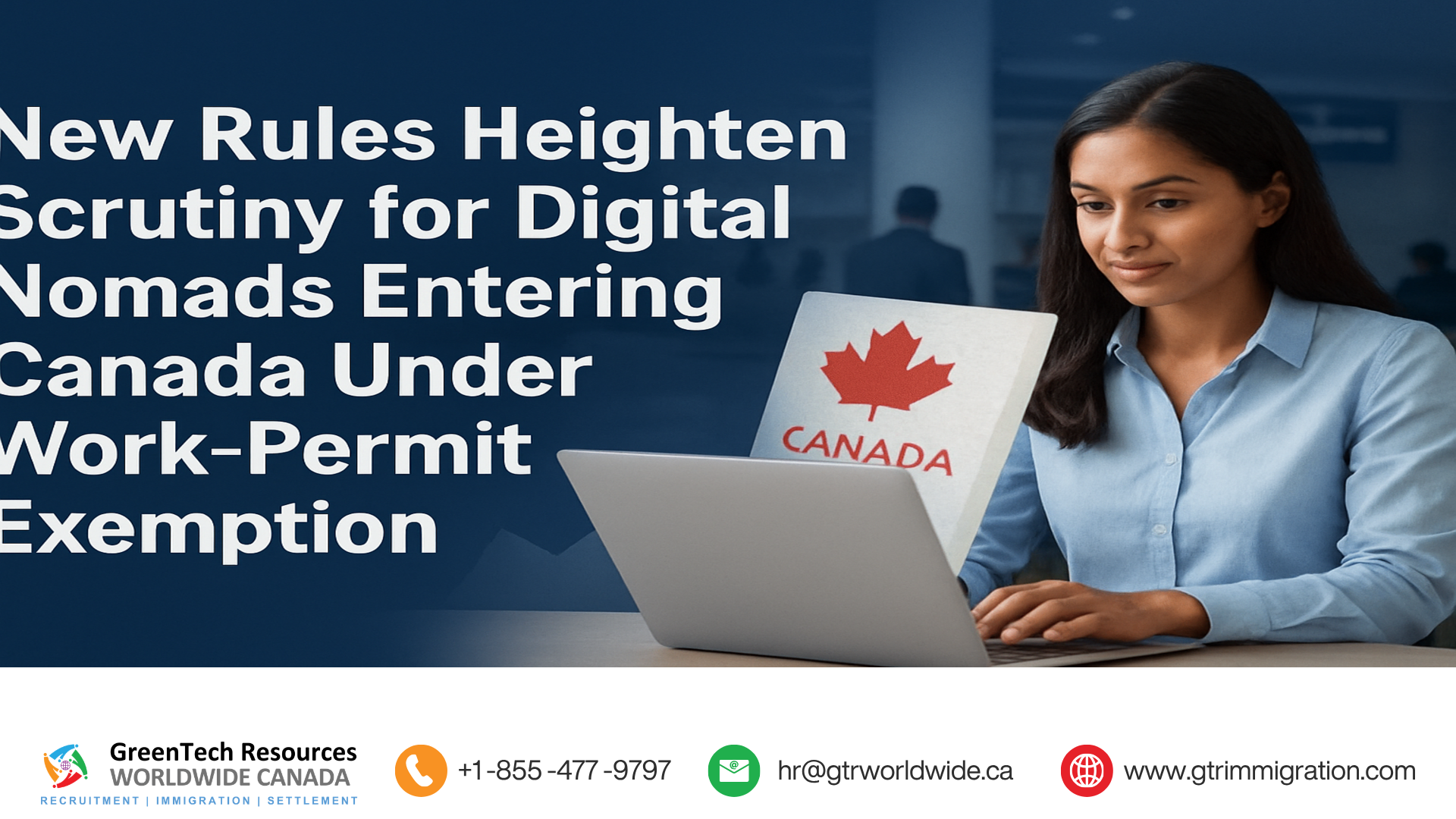
Canada Tightens Rules for Digital Nomads: New Requirements for Work-Permit Exemption
Introduction — what changed and why you should care
On May 26, 2026, the immigration department updated its instructions to officers under the heading “Temporary residents: Digital nomads.” The key change: digital nomads entering Canada under the common work-permit exemption will now face increased scrutiny. Where officers were previously told that digital nomads did not need additional documentation beyond what ordinary visitors provide, the new guidance requires nomads to show sufficient documentation that their income is earned entirely outside Canada and that they will be working remotely for a foreign employer or, if self-employed, providing services exclusively to clients outside Canada. This matters to anyone planning to work remotely from Canada for up to six months without a work permit, because the new instructions raise the evidentiary threshold and clarify how officers should assess these travellers at the border and during stays inside Canada.
Background
Canadian immigration rules have allowed remote workers — often called digital nomads — to enter Canada as visitors and perform remote work while in the country for periods of up to six months at a time. The legal basis for not requiring a work permit is that such remote work does not constitute entry into the Canadian labour market, provided that the worker’s employer and clients have no financial ties to Canada. Previously, internal guidance to officers treated digital nomads similarly to other visitors, stating that additional documentation was not required. The May 26, 2026 update revises that approach and instructs officers to seek and evaluate documentation demonstrating that work and income are tied exclusively to foreign sources.
What the updated instructions say
The updated instructions introduce several specific points for officers to apply when assessing digital nomads:
- Digital nomads must provide sufficient documentation to demonstrate that their income is earned entirely outside Canada and that they will be working remotely for a foreign employer or, if self‑employed, that they will be providing services exclusively to clients outside Canada.
- If a digital nomad wishes to remain in Canada longer than the period of stay originally authorized, they should apply for a visitor record.
- A digital nomad must satisfy the officer that they will not be entering the Canadian labour market.
- Any accompanying family members must apply for their own temporary resident status.
- A digital nomad within Canada can begin working for a Canadian employer without a work permit only if they qualify under a different work permit exemption under section 186 of the Immigration and Refugee Protection Regulations (IRPR).
- Digital nomads must meet Canada’s general entry requirements for temporary residents, including demonstrating financial support while in Canada, satisfying the officer they will leave at the end of their authorized stay, and not being inadmissible on medical or criminal grounds.
The update therefore both tightens the evidentiary expectations and records additional administrative steps officers should apply at point of entry and during any stay extensions.
Analysis — what the update means in practice
This update signals a shift from a lighter-touch approach to a more evidence-driven assessment of remote workers entering Canada as visitors. By explicitly requiring “sufficient documentation” that income and work relationships are entirely foreign, the instructions formalize what officers should request and evaluate.
Operationally, the change gives officers clearer authority to ask for proof and to refuse entry or authorize a shorter stay if the evidence does not satisfy them that the applicant will not enter the Canadian labour market. It also clarifies administrative pathways for existing nomads who want to extend their stay, as well as rules around accompanying family members.
The reference to section 186 of the IRPR is noteworthy. It reminds applicants and officers that exemptions other than the digital nomad visitor pathway exist and that a move from remote work for foreign employers to work for a Canadian employer while inside Canada is possible only if another exemption applies. The instructions reinforce that classification of activity — visitor working remotely versus engaging with the Canadian labour market — is central to whether a work permit is required.
Who will be affected
The updated guidance affects several groups:
- Remote workers and digital nomads who plan to enter Canada as visitors and work remotely for short periods without a work permit.
- Self-employed remote workers whose clients are located outside Canada and who rely on the visitor exemption to perform services from within Canada.
- Family members accompanying a digital nomad, who now must apply for their own temporary resident status rather than automatically deriving status from the nomad’s entry.
- People already in Canada as digital nomads who plan to extend their stay; they will need to apply for a visitor record.
- Border and visa officers, who must apply the updated instructions when assessing admissions and extension requests.
- Anyone considering a mid-visit change to working for a Canadian employer, because a separate exemption under section 186 of the IRPR is required for that scenario.
The update touches a range of practical situations: initial admission at a port of entry, extensions while inside Canada, family travel planning, and transitions to Canadian employment.
Practical impact for readers
For remote workers planning short stays in Canada without a work permit, the practical impact is heightened scrutiny at entry and a need to be prepared to demonstrate that their work and income are entirely foreign. Officers will expect a convincing showing that the individual will not enter the Canadian labour market. While the instructions do not list an exhaustive checklist of documents, the requirement to provide “sufficient documentation” elevates the importance of demonstrable evidence at the time of entry or when applying for a visitor record.
Accompanying family members can no longer assume they are covered by the nomad’s visitor status; each person must apply for temporary resident status independently. That has implications for travel planning, visa applications where required, and the ability of family members to study or work (since different rules apply to those activities).
If you plan to remain longer than the initial authorized stay, you should apply for a visitor record as the updated guidance states. A visitor record is the administrative tool used to extend lawful temporary residence when permitted. The updated instructions make clear that this is the recommended route when additional time is required.
For anyone considering beginning work for a Canadian employer while in Canada, the update underscores that doing so without a work permit is not simply a matter of switching clients or employers. The nomad would need to satisfy the conditions of a different work permit exemption under section 186 of the IRPR. The updated guidance reminds both applicants and officers to consider that switch carefully.
Finally, the reiteration of general entry requirements — financial support, intention to leave, medical and criminal admissibility — means border officers will continue to apply the broad entry tests to digital nomads, in addition to the new documentation expectations specific to remote work.
What applicants should pay attention to next
Given the updated instructions, attention to the following points will be important:
- Plan documentation and be ready to satisfy an officer that income is earned entirely outside Canada and that clients or employers are foreign. The instructions make clear that satisfying the officer is a requirement for entry under the digital nomad approach.
- If you want to stay beyond the initial authorized period, prepare to apply for a visitor record according to the guidance so your stay remains lawful.
- Do not assume accompanying family members are automatically covered; they must obtain their own temporary resident status.
- If you intend to begin working for a Canadian employer while in Canada, recognize that a different exemption under section 186 of the IRPR is needed. Ensure you understand whether that exemption applies in your circumstance before changing employers.
- Remember the general entry tests still apply: you must be able to support yourself financially while in Canada, satisfy the officer that you will leave at the end of your authorized stay, and not be inadmissible for medical or criminal reasons.
- Expect officers to exercise judgment about whether the evidence presented is sufficient. The instructions now make that judgment a formal part of the process.
The updated approach shifts responsibility onto applicants to demonstrably meet the foreign-income and foreign-client/employer conditions at the point of entry and during any extension request.
What This Means for Applicants
For applicants, the immediate takeaway is that entering Canada as a digital nomad is still possible but now requires a clearer and potentially heavier evidentiary basis. Officers will actively look for proof that your income and work are tied exclusively to foreign sources and that you will not be entering the Canadian labour market.
Applicants should expect questions at the border and should be prepared to respond. If you need more time in Canada, follow the guidance to apply for a visitor record rather than assuming an automatic extension. If family members travel with you, ensure each person has applied for the appropriate temporary resident status.
If you plan to change the nature of your work while in Canada — for example, to begin working for a Canadian employer — do not proceed without ensuring you meet an applicable exemption under section 186 of the IRPR. The instructions make clear this is a distinct legal pathway from the visitor/exemption approach for remote work done for foreign employers or clients.
Ultimately, applicants will need to demonstrate both that the digital nomad exception applies in their circumstances and that they meet the broader temporary resident entry criteria.
Key Takeaways
- Updated instructions titled “Temporary residents: Digital nomads” were published on May 26, 2026.
- Digital nomads entering Canada under the common work-permit exemption must now provide sufficient documentation that their income is earned entirely outside Canada and that they will work remotely for a foreign employer or, if self‑employed, provide services exclusively to clients outside Canada.
- Officers will assess whether nomads will enter the Canadian labour market; satisfying the officer is required for admission under this pathway.
- If you need to stay longer than your initial authorized period, you should apply for a visitor record.
- Accompanying family members must apply for their own temporary resident status.
- A nomad can begin working for a Canadian employer without a work permit only if they qualify for a different exemption under section 186 of the IRPR.
- General temporary resident entry requirements remain in force: financial support, intention to leave, and medical and criminal admissibility.
Next steps and final thoughts
The May 26, 2026 instructions represent a substantive clarification of policy and an operational tightening of how border and visa officers should treat digital nomads. If you plan to visit Canada while working remotely for a foreign employer or serving foreign clients, treat your arrival as a situation where an officer will expect to see evidence that your work and income are entirely foreign. Prepare to apply for a visitor record if you need more time, and ensure that family members have the appropriate temporary resident status before travel.
Rules and instructions like these change how officers exercise discretion at ports of entry and on extension requests. Pay attention to the updated guidance and make sure your travel and work plans align with the requirements set out in the new instructions.
For personalized support with your Canadian immigration pathway, contact GTR Immigration.
Call us: +1 855 477 9797
#digitalnomads #workpermit #immigration #visitorvisa #IRPR #temporaryresidence #Canada #immigrationnews