



Off-campus work rules for international students: May 2026 update
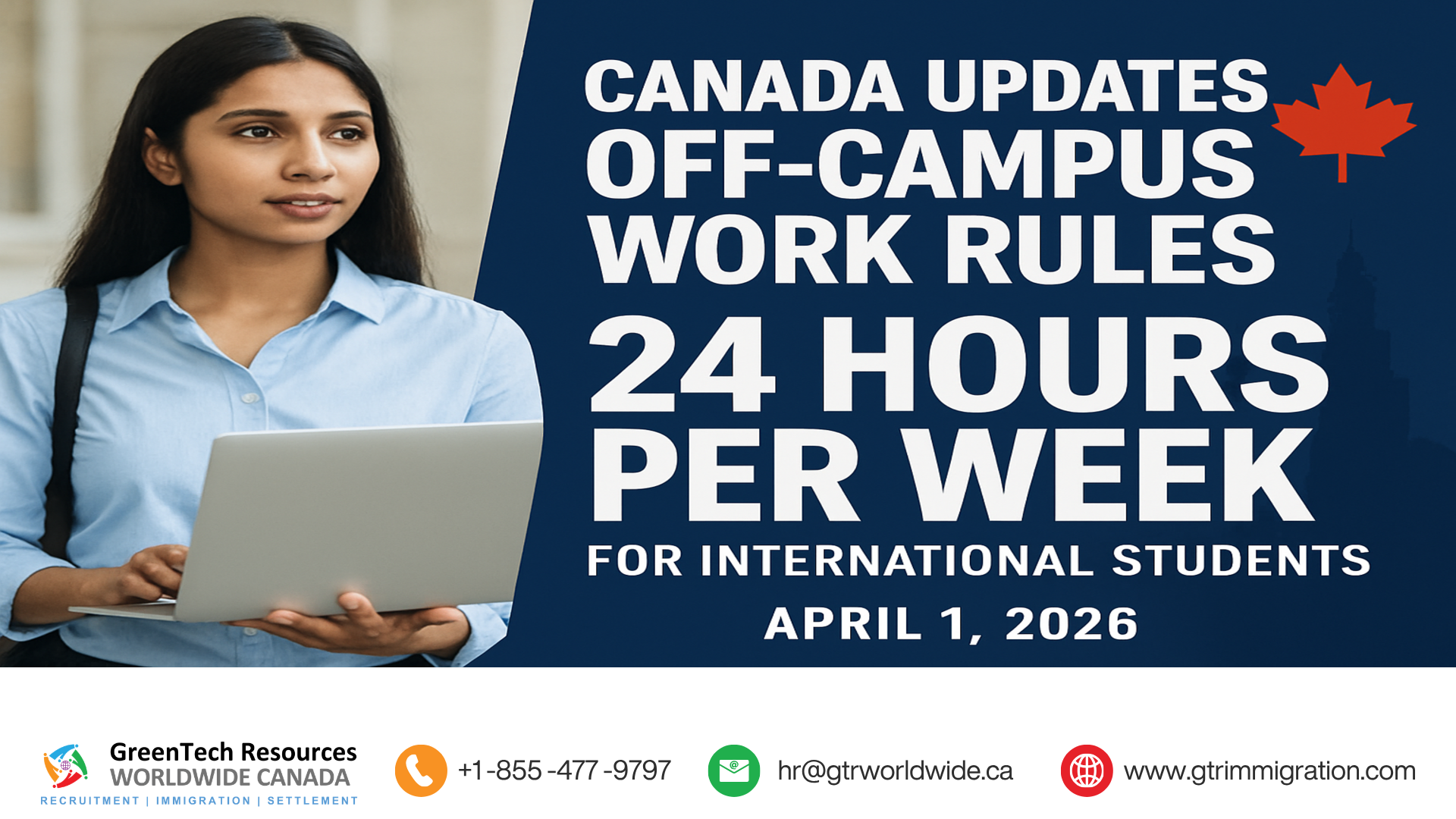
Canada Updates Off-Campus Work Rules for International Students
International students in Canada can work up to 24 hours per week off-campus during academic terms, with unlimited hours during scheduled breaks. This rule has been in place since fall 2024, but the surrounding regulations have continued to evolve through 2025 and into 2026. The most significant change occurred on April 1, 2026, when the separate co-op work permit was eliminated for eligible post-secondary international students.
To work off-campus without a separate work permit, international students must meet specific conditions. They must hold a valid study permit, be a full-time student at a designated learning institution (DLI), and be enrolled in a post-secondary academic, vocational, or professional training program. They must also have started their studies and have a Social Insurance Number (SIN). Their study permit must state that they are authorized to work.
Certain situations are explicitly ineligible for off-campus work without a work permit, including enrollment in English as a Second Language (ESL) or French as a Second Language (FSL) programs, general-interest or self-improvement courses, and preparatory or pathway programs. Exchange students at a Canadian DLI through a foreign-institution exchange are also not eligible. Part-time students are generally not eligible, with one exception: students in the final term of their program who are part-time only because they’re finishing their final required courses.
Scheduled breaks are periods when the 24-hour cap doesn’t apply. To qualify, the break must be set out in the school’s published academic calendar, and the student must be enrolled in the term immediately before and after the break. Standard scheduled breaks include winter break, reading week or spring break, and the summer term if the student is enrolled in the surrounding terms. A scheduled break must last at least seven days, and statutory holidays do not count on their own.
The April 2026 change to co-op work permits is significant. As of April 1, 2026, eligible post-secondary international students no longer need a separate work permit to participate in student work placements required by their program, such as co-op placements and internships. To be eligible, students must have a valid study permit, be full-time enrolled at a DLI, and have a study program that includes a mandatory work placement. The work placement must total 50% or less of the study program.
If an international student works more hours than they’re allowed, it’s a violation of their study permit conditions. They can lose their student status, may not be approved for future study or work permits, and may have to leave the country. In serious cases, unauthorized work can lead to a finding of inadmissibility under the Immigration and Refugee Protection Act.
International students should be aware of these rules and regulations to avoid any issues with their study permit or future immigration applications. If they’ve already gone over the 24-hour limit, they should stop immediately, document the lapse, and consult a licensed immigration lawyer or consultant before their next study permit renewal or post-graduation work permit application.
For personalized support with your Canadian immigration pathway, contact GTR Immigration.
Call us: +1 855 477 9797
#CanadianImmigration #InternationalStudents #OffCampusWork #StudyPermit #WorkPermit #ImmigrationRules #GTRImmigration