



Plum Coulee 1922 Train Sparked Mexican-Canadian Citizenship Claims
Canadian citizenship by descent: what Mexico’s Mennonite history and Bill C-3’s 2025 changes mean for tens of thousands
Why the December 15, 2025 change matters now
On December 15, 2025, Parliament amended Canada’s Citizenship Act under Bill C-3 to remove the “first‑generation limit” and fix other intergenerational restrictions. That means many people born abroad who can trace an unbroken line to a qualifying Canadian ancestor may now be Canadian by descent — even when intermediate generations were born and raised outside Canada or when the ancestor left long before modern Canadian citizenship existed. For descendants of the Mennonite communities that left Manitoba and Saskatchewan for Mexico in the 1920s, and for other families with historic Canadian ties, family memory, surnames and archival records can now form the basis of an actionable citizenship claim.
How a century‑old migration connects to modern law
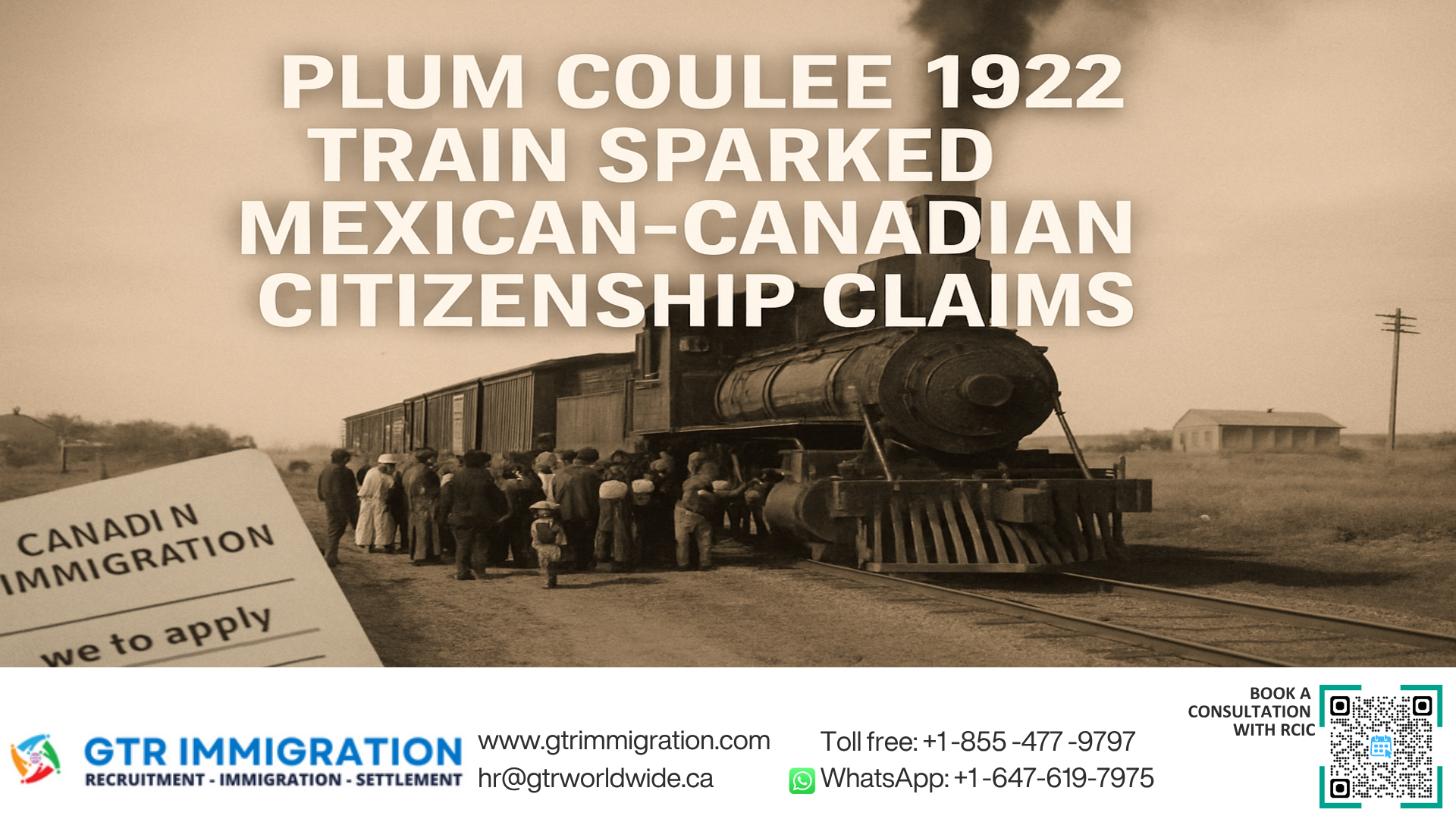
Between 1922 and about 1930, thousands of Low German‑speaking Mennonites left western Manitoba and parts of Saskatchewan after disputes over schools, conscription and religious autonomy. The first chartered train left Plum Coulee, Manitoba on March 1, 1922; roughly 400 people arrived six days later in Chihuahua. More trains followed, and settlers formed the Manitoba and Swift Current colonies around what became Ciudad Cuauhtémoc; another group settled near today’s Nuevo Ideal in Durango. Studies count about 6,000 migrants in that period, Mexican records suggest up to 10,000, and by 1965 an estimated 35,000 people with Canadian roots lived in Mexico. Today their descendants number in the tens of thousands.
A key legal detail: modern Canadian citizenship didn’t exist before January 1, 1947. Until then people in Canada were British subjects. The amended Citizenship Act treats people born in Canada before 1947, or naturalized there before 1947, as Canadian for the purpose of passing citizenship down the line. Parliament designed the changes to preserve that chain even when descendants later lost British subject status. In short, the law now looks past 1947 and the old one‑generation cutoff to allow citizenship to flow from an eligible ancestor across multiple generations, provided documentary links exist.
What the change actually does — plain language
– Removes the first‑generation limit that previously stopped citizenship by descent after one generation born outside Canada.
– Fixes older provisions that blocked transmission of Canadian status through multiple generations born abroad.
– Lets a person who documents a direct lineage to a qualifying Canadian ancestor apply to be recognized as a Canadian citizen.
– Treats pre‑1947 Canadian births or naturalizations as valid anchors for later claims, even if the ancestor later left Canada.
These are legal fixes, not automatic conferrals. Eligible people must apply to federal authorities and submit evidence proving the chain of descent.
Who may now be Canadian because of these changes
– Descendants of the 1922–1930 Mennonite migration from western Manitoba and parts of Saskatchewan to Chihuahua and Durango.
– People born in Mexican towns or colonies named Manitoba or Swift Current, or in communities around Ciudad Cuauhtémoc and Nuevo Ideal, with family roots tracing to Canada.
– Mexico‑born children of Canadian parents who returned from Canada in later decades.
– Descendants of early Canadian settlers, engineers, investors or business families who once lived in Mexico.
– Residents of Mexican retirement communities with documented Canadian populations (Chapala/Ajijic, Puerto Vallarta, Mazatlán, Los Cabos) whose family histories include a Canadian parent.
Important caution: not every family connection creates a claim. Residence in Canada or ancestors who merely passed through does not by itself create entitlement. The legal test depends on a Canadian birthplace or a recorded naturalization before 1947, plus an unbroken documentary chain linking the applicant to that ancestor.
What documentary evidence matters — where to look first
The amended law requires archival proof of the generational link. Useful starting points include:
– 1930 Mexican census: Cornelius Heinrichs indexed Mennonite households village by village; the Mennonite Historical Society of Alberta publishes that index for free and it records birthplace for each person.
– Provincial vital records: Manitoba opens births after 100 years (marriages at 80, deaths at 70). Saskatchewan’s eHealth index lists births registered more than 100 years ago and deaths more than 70 years old and is searchable online.
– Naturalization records: For ancestors born in Europe, a pre‑1947 Canadian naturalization can anchor a claim; Library and Archives Canada indexes early naturalizations.
– Local Mexican records and family sources: colony records, civil registries, church registers, family Bibles, letters and oral histories often record birthplaces and migration details.
Begin at home: search family papers for a Manitoba or Saskatchewan birthplace, common Mennonite surnames (Sawatzky, Fehr, Friesen, Penner, Wiebe, Klassen, Dyck, Neufeld, Reimer), or notes of naturalization. Those clues guide archive searches and formal applications.
Practical consequences for applicants and families
– Potential dual citizenship: Many who qualify may become dual Canadian–Mexican citizens.
– Access to rights and services: Recognition as a Canadian citizen opens rights such as a Canadian passport and other protections reserved for citizens. Consult the federal government for a full list.
– Administrative process remains: Citizenship is not automatic; applicants must file evidence with federal authorities. Where records are incomplete, help from archives, registries or community historians may be needed.
– Generational chain: Citizenship can flow across multiple generations born abroad, but each link must be documented.
– Community implications: Entire villages or extended families may discover multiple eligible members, creating local demand for record searches and legal or consular help.
Common pitfalls and documentary hurdles
– Surnames and village names alone do not prove eligibility. Confirm the ancestor’s actual place of birth or a pre‑1947 naturalization.
– Mixed‑birth households: families often include people born in different countries; identify which family member anchors the claim.
– Missing or ambiguous records: some records are not digitized or are incomplete; use ancillary documents (marriage certificates, church records, census entries) to bridge gaps.
– Change of nationality: some migrants later became citizens of another country. The law allows claims to be restored, but applicants must still document the original pre‑1947 tie.
Steps applicants should focus on now
– Compile family documents: names, birthplaces, dates, marriage details and migration stories from family Bibles, ID cards, letters and photos.
– Search the 1930 Mexican census index and local colony lists for birthplace notations (the Mennonite Historical Society of Alberta’s index is a free starting point).
– Request provincial vital records where indicated: Manitoba and Saskatchewan records described above.
– Look for pre‑1947 Canadian naturalization records if an ancestor was born in Europe but lived in Canada.
– Document each generational link with certified records where possible, and arrange translations for records in German, Spanish or Low German church registers.
Why this matters beyond individual claims
The Bill C‑3 amendments correct a historical mismatch between migration patterns and nationality law. Many Canadian‑rooted migrations happened when nationality concepts were different (British subject status versus Canadian citizenship). Restoring those lines reconnects diaspora populations with Canada and may influence family choices about travel, education, work and long‑term settlement for generations who never lived in Canada.
What readers should watch next
– Community documentary campaigns: expect local efforts to assemble records and guide applicants where many may be eligible.
– Processing and demand: a rise in applications could lengthen processing times; well‑documented files reduce delays.
– Official guidance: follow Citizenship and Immigration Canada for form requirements, acceptable proof and submission details.
Final practical checklist
– Do you have an ancestor born in Manitoba or Saskatchewan before 1947?
– Do you have a documented ancestor who naturalized in Canada before 1947?
– Can you connect each generation with certified records or reliable archival entries?
– Have you checked community indices like the 1930 Mexican census index for explicit “Canada” birthplace notations?
– Do you have translations ready for non‑English documents and a plan to request certified copies from provincial registries?
🚀 Start Your Canada Immigration, Jobs & Settlement Journey Today
Need help with Express Entry, PNP, LMIA, Work Permit, Study Permit, Visitor Visa, Family Sponsorship, Canada Jobs, Recruitment, or Settlement guidance? Book a paid consultant: https://gtrworldwide.zohobookings.com/#/greentechresourcesworldwidecanadawebsite
📱 WhatsApp / Call: +1 647 619 7975 / +1 639 560 3180
🌐 Website: www.gtrimmigration.com
💼 Canada Job Site: www.ciccanadajobs.com
📊 Job Analytics & Labour Market Insights: www.jobmaze.ca
🔗 LinkedIn: www.linkedin.com/in/manojcanada
📘 Facebook: https://www.facebook.com/gtrimmigrationcanada
▶️ YouTube: https://www.youtube.com/@GTRImmigration
📸 Instagram: https://www.instagram.com/gtr_immigration
#CanadianCitizenshipByDescent #BillC3 #MennoniteMigration #MexicoToCanada #CitizenshipRestoration #ManitobaToChihuahua #GenealogyForCitizenship