


Trump Orders Lake Ontario Called Lake America as Citizenship Interest Grows
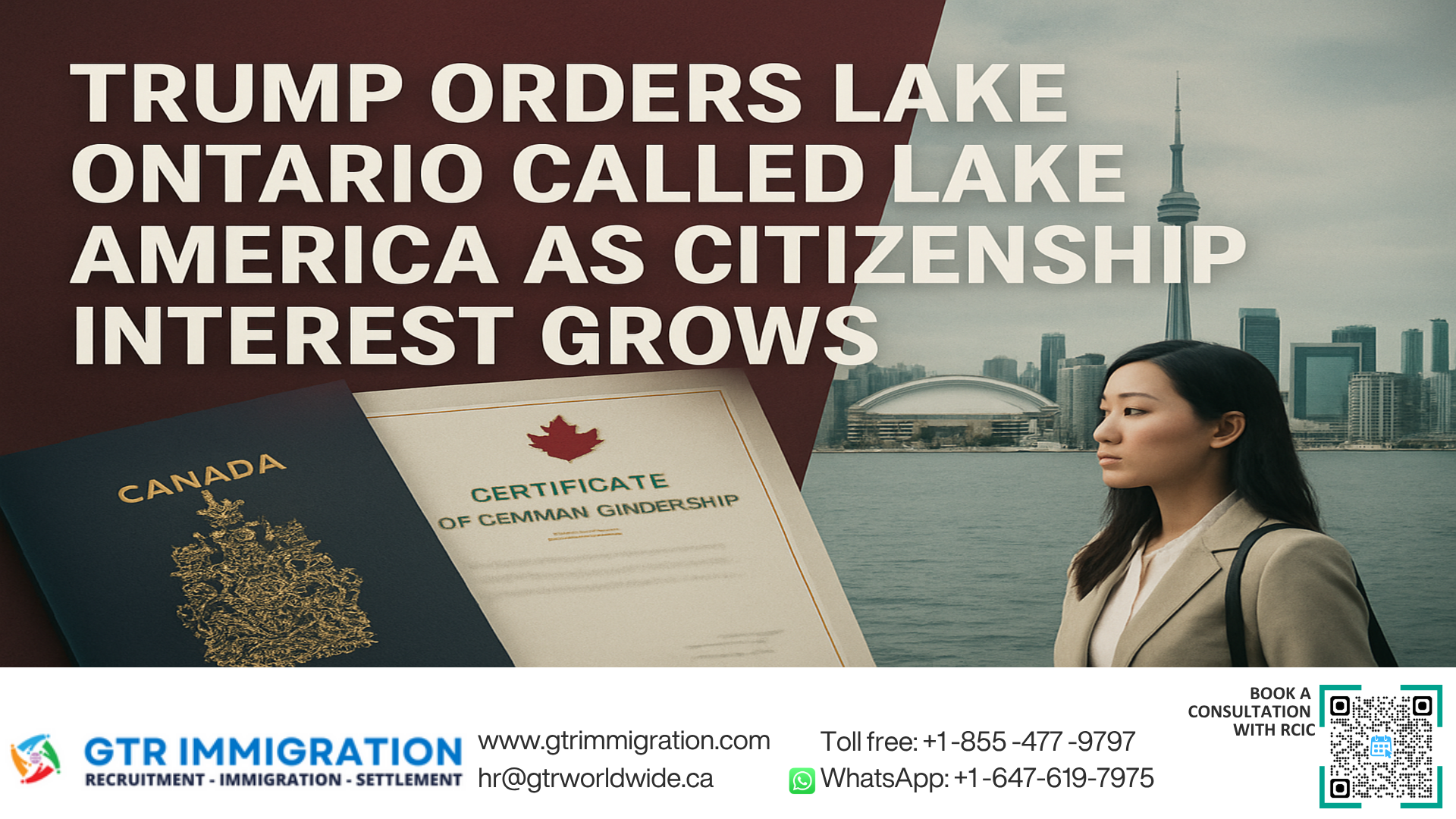
Bill C-3 and the surge of American applications for proof of Canadian citizenship — why it matters now
Canada’s December 15, 2025 change to citizenship law (removing the “first‑generation” limit under Bill C-3) has triggered a large, sustained rise in applications from U.S. residents claiming Canadian ancestry. That increase is occurring against a backdrop of growing Canada–U.S. trade and political tensions that began with tariffs in February 2025 and escalated through public and diplomatic disputes in 2026. For eligible Americans, the law change makes it easier to obtain a citizenship certificate — and a Canadian passport — without a citizenship oath or test, while keeping U.S. citizenship intact. The result: long queues, heavy archival demand, and new practical choices for people considering study, work, family mobility or contingency planning.
How the Canada–U.S. political and trade environment set the stage
The application spike is connected to cross‑border tensions. Tariffs imposed in February 2025 and subsequent measures and rhetoric in 2026 have disrupted sectors such as agriculture and construction and prompted some local reciprocal actions (for example, restrictions on U.S. alcohol sales in certain provinces). High‑profile incidents in August 2026 — including a U.S. executive order on Lake Ontario’s name and sharp public comments about Canada’s trade practices — added symbolic pressure. Economists say Canada’s overall growth hit may be modest but uneven, with provinces like British Columbia, Ontario and Quebec likely to feel tariffs most strongly. Some observers warn that longer disruptions may encourage Canadian firms to reorient supply chains and customers away from the U.S.
What Bill C-3 changes for lineage-based claims
The law removed the “first‑generation” limit for citizenship by descent for people born before December 15, 2025. Practically, anyone who can document a direct line of descent from a Canadian ancestor (parent, grandparent, great‑grandparent or earlier) may already be a Canadian citizen by law. Those who can prove the chain apply to IRCC for proof of citizenship; if approved, they receive a citizenship certificate that establishes legal Canadian citizenship and eligibility for a Canadian passport.
Scale and administrative pressure: the numbers to watch
Reported indicators since Bill C-3 include:
– January 2026: applications from U.S. citizens outnumbered the combined total from the next nine source countries.
– Processing queue growth: people awaiting proof of citizenship rose from 70,400 in May 2026 to 121,800 in August 2026 — an increase of 51,400 in three months.
Archives that hold vital records have reported unusually high demand, with some seeing years’ worth of requests in only a few months. Expect longer government processing times and archive waits.
Who is most likely to be affected or benefit
– Descendants of Canadian emigrants (especially grandchildren and great‑grandchildren). Historic migration — for example, roughly 900,000 French Canadians moving from Quebec to New England between 1840 and 1930 — creates a large pool of eligible descendants.
– Youth and students seeking Canadian education advantages and in‑province access.
– Young workers eligible for International Experience Canada (age limits noted in the source as “under the age of 30 or 35” depending on program rules).
– Families planning long‑term relocation who would gain access to provincial residency, public healthcare and social services once they establish residency.
– Americans seeking a contingency option amid political or economic uncertainty.
Why many Americans are applying now
Two main drivers:
1) Eligibility: decades of cross‑border migration mean many Americans already qualify through ancestry once the first‑generation limit was removed.
2) Uncertainty: geopolitical and economic concerns have increased interest in a second nationality. The source reports investor citizenship applications rose by over 75% in 2025, and a spring 2025 Harris poll found strong interest in dual citizenship (about half of Americans overall and roughly two‑thirds of Gen Z and Millennials), with many citing security, stability, healthcare and affordability.
Practical advantages and limits of a citizenship certificate
Advantages:
– Documentary proof of citizenship without a ceremony, oath or test in these lineage cases.
– Dual nationality allowed — obtaining Canadian citizenship does not require renouncing U.S. citizenship.
– Canada taxes on residency, not citizenship; acquiring Canadian citizenship alone does not automatically create Canadian income‑tax obligations unless you become a Canadian tax resident. The U.S.–Canada tax treaty offers relief to reduce double taxation for residents who must navigate both systems.
– Educational and mobility perks: children of Canadian citizens can study in Canada without a study permit in many cases; younger citizens can access International Experience Canada opportunities; establishing residency enables access to public healthcare and social services.
Limits and constraints:
– Administrative backlogs and long documentary searches at archives.
– Processing delays that may last months.
What applicants should prepare now
– Identify your “anchor ancestor” by speaking with older relatives.
– Collect primary documents generation by generation (birth, marriage, death records) to establish the chain of descent required by IRCC.
– Start archive requests early and expect longer turnaround times.
– Consider a licensed immigration lawyer if lineage is complex or records are incomplete.
– Keep U.S. identity documents current; obtaining Canadian proof of citizenship does not remove U.S. citizenship but you may need parallel documentation.
Sectoral and regional ripple effects to consider
– Regional vulnerability: economists cited in the source expect uneven impacts across provinces, with British Columbia, Ontario and Quebec among the most affected.
– Industry exposure: agriculture and construction are already identified as directly affected sectors.
– Long‑term corporate reorientation could change job and investment opportunities in Canada over time.
Immediate checklist before you apply
– Confirm eligibility through a documented line of descent to a Canadian ancestor born before Dec 15, 2025.
– Talk to oldest relatives to establish the anchor ancestor and collect family records.
– Request vital records from archives early and track timelines and fees.
– Assemble documents generation by generation to meet IRCC criteria.
– Consider legal help for complex cases.
– Prepare for delays and keep copies of every submission.
Looking ahead: what to track
– IRCC processing queue sizes and official service updates.
– Archive capacity and turnaround times.
– Trade and political developments between Canada and the U.S., which could drive further demand.
🚀 Start Your Canada Immigration, Jobs & Settlement Journey Today
Need help with Express Entry, PNP, LMIA, Work Permit, Study Permit, Visitor Visa, Family Sponsorship, Canada Jobs, Recruitment, or Settlement guidance? Book a paid consultant: https://gtrworldwide.zohobookings.com/#/greentechresourcesworldwidecanadawebsite
📱 WhatsApp / Call: +1 647 619 7975 / + 1 639 560 3180
🌐 Website: www.gtrimmigration.com
💼 Canada Job Site: www.ciccanadajobs.com
📊 Job Analytics & Labour Market Insights: www.jobmaze.ca
🔗 LinkedIn: www.linkedin.com/in/manojcanada
📘 Facebook: https://www.facebook.com/gtrimmigrationcanada
▶️ YouTube: https://www.youtube.com/@GTRImmigration
📸 Instagram: https://www.instagram.com/gtr_immigration
#CanadaCitizenship #BillC3 #DualCitizenship #USCanadaRelations #ImmigrationAdvice #ProofOfCitizenship #InternationalMobility