


Woonsocket’s French Heritage Could Mean Canadian Citizenship
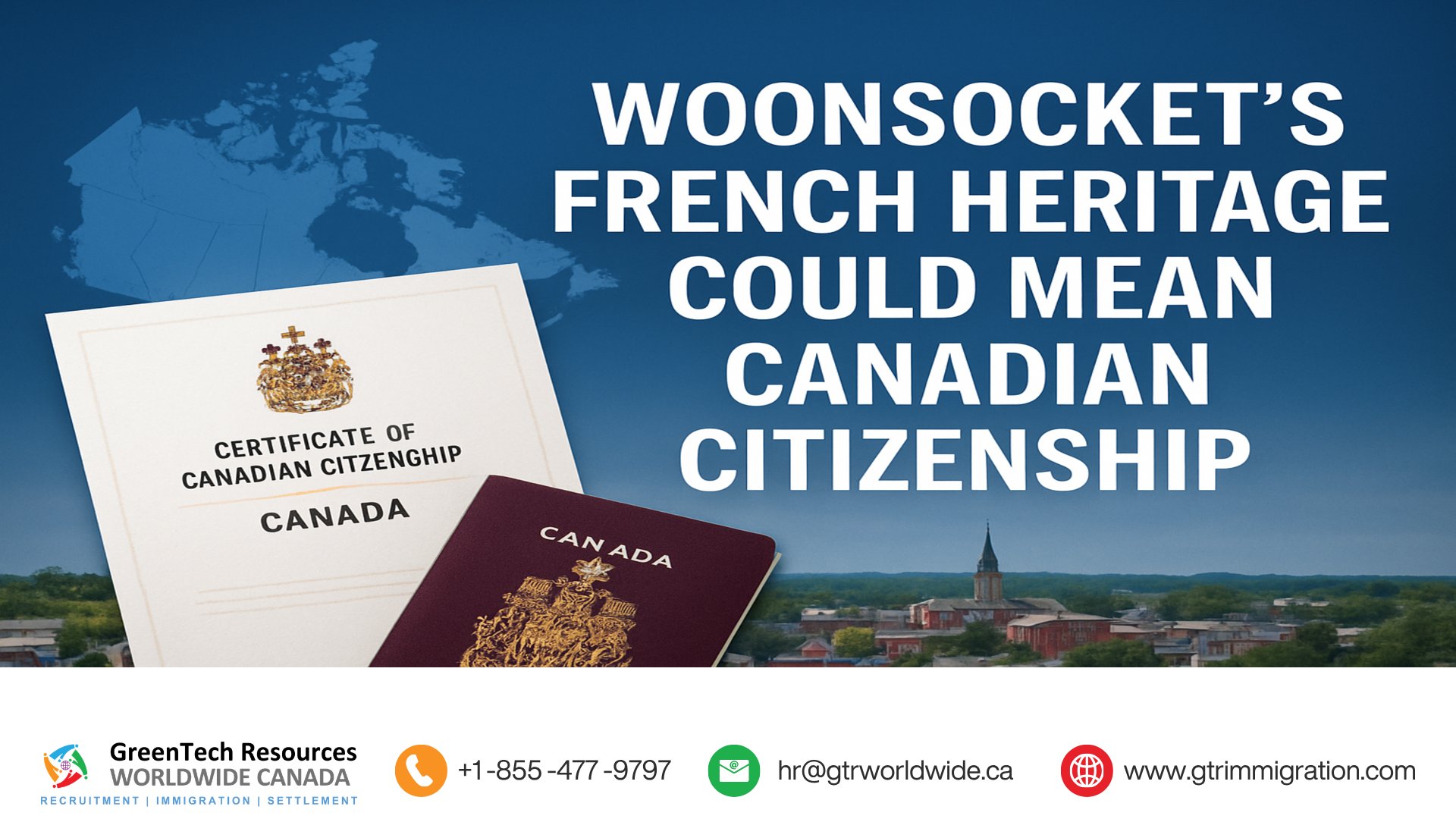
Canadian citizenship by descent after Bill C-3: why thousands in Woonsocket may already be Canadian
The Canadian law change known as Bill C-3, which took effect on December 15, 2025, removed the old first-generation limit on citizenship by descent. For cities like Woonsocket, Rhode Island — long known as “la ville la plus française aux États-Unis” — the result is concrete: a conservative estimate suggests roughly 7,000 residents (about one in six) descend from French-Canadian families and may already be Canadian citizens under the new rules. This article explains why the update matters, how it works in practice, and what Woonsocket families should know before applying for proof of citizenship.
Historic ties that make Woonsocket uniquely affected
Woonsocket’s strong connection to Quebec began in the 1840s when mill owners actively recruited French-Canadian workers for factories in the Blackstone Valley. The flow accelerated between roughly 1865 and 1910, as many Quebecois left farms for steady factory pay. Immigrants established French-language institutions — newspapers, Catholic schools and parishes such as Precious Blood (organized in 1872) — creating a dense, self-sustaining Franco-American community.
By 1900, French Canadians comprised about 60% of Woonsocket’s population; by 1930 that share rose to roughly 70% — approximately 35,000 of the city’s 50,000 residents at the time. A 1913 study even ranked Woonsocket first among U.S. cities by share of French speakers. That concentration, sustained across generations, is why millions of Americans elsewhere will not see the same scale of immediate impact as Woonsocket.
What Bill C-3 changes — in plain terms
Before Bill C-3, Canadian citizenship by descent was generally limited to one generation born abroad: a person born outside Canada could claim citizenship only if their parent was a Canadian citizen by birth or naturalization. Bill C-3 removed that “first-generation limit” in most cases for people born outside Canada before December 15, 2025. As a result, many descendants whose family lines trace back to a Canadian ancestor now qualify as citizens automatically under the legislation.
However, this automatic status is legal in effect but not obvious to the individual. To exercise practical rights — for example, to obtain a Canadian passport — an applicant must receive a formal proof of Canadian citizenship certificate from Canada’s citizenship department. That certificate requires documentary evidence of an unbroken chain of descent from the Canadian ancestor through every generation.
Who in Woonsocket is likely affected?
The most immediately affected people are residents who can document a continuous line to a Canadian ancestor — and many of those ancestors will be from Quebec. A conservative estimate, based on self-reported ancestry data, puts Woonsocket’s share of French-Canadian ancestry at 16.1% applied to a 2024 population estimate of 43,521, producing about 7,000 people. That figure is a heritage estimate, not a count of confirmed citizens.
Importantly, self-reported ancestry undercounts the true number in two predictable ways:
- Over generations, families often anglicized their names (for example, Leblanc to White, Charpentier to Carpenter, La Rivière to Rivers). A family using an English surname for a century may no longer self-identify as French-Canadian even though they have a Quebec-born ancestor.
- “Dit names” and other naming practices led to partial preservation of ancestral surnames and loss of the original form across branches, making tracing through modern surname checks unreliable.
Because of those factors, the population with an eligible Canadian ancestor in Woonsocket is likely larger than the 7,000 estimate based on self-reporting.
How the citizenship confirmation process actually works
Qualifying on paper and obtaining the official certificate are distinct steps. To secure a proof of Canadian citizenship certificate, an applicant must compile documents that establish an unbroken chain from the Canadian ancestor to themselves. Typical records required include birth certificates, baptismal records, marriage certificates, and death certificates for every generation in the chain.
Most Woonsocket lines will require records from Quebec’s vital records registry and related archives. Since Bill C-3 became effective, Quebec’s national archives have reported a roughly 3,000% increase in requests for records. That surge reflects the number of people attempting to find the primary documents necessary to prove descent.
Applicants may submit their application independently or use a government-authorized representative, such as an immigration lawyer, to assemble and manage the file. The current processing time for proof of citizenship certificates has expanded as demand rose and is now approximately 15 months.
Legal rights and common motivations — what citizenship confers
Once recognized, U.S.–Canadian dual citizens hold the full legal rights of both countries. Under the new law and current practice, those rights include the ability to live and work in Canada permanently and to vote in Canadian elections, subject to applicable residency rules. The source material emphasizes that claiming Canadian citizenship does not create additional U.S. tax obligations.
Most residents seeking confirmation are not planning immediate relocation. Many are established professionals or families who see Canadian citizenship as a durable, intergenerational backup option: a document that future generations can use if circumstances change. Others may value the ability to travel with a Canadian passport or to hold formal ties to family heritage.
Practical hurdles Woonsocket applicants should expect
Tracing an unbroken line to a Canadian ancestor is the pivotal challenge. Common obstacles include missing records, name changes across generations, and the need to collect documents held in multiple jurisdictions. Specific practical issues likely to arise for Woonsocket applicants:
- Anglicized surnames: A surname change does not invalidate descent, but applicants must bridge records that show the name evolution across generations.
- Religious versus civil records: In older generations, baptismal certificates or parish registers may be the only surviving documentary evidence. Applicants should expect to gather both civil and church records where necessary.
- “Dit names” and split surnames: Some family branches preserved only part of a compound name, complicating searches unless researchers look for variant forms.
- Processing delays: The surge in document requests and applications means the certificate timeline is longer than in quieter periods; the present estimate is about 15 months from application to certificate issuance.
Local advantages: where Woonsocket residents can begin
Woonsocket offers a distinct practical advantage: the American-French Genealogical Society, located at 78 Earle Street, holds more than 20,000 volumes of vital records, family genealogies and historical material focused on French-Canadian descent. For anyone trying to trace a line back to Quebec, that collection is a valuable head start and can reduce the time and difficulties involved in locating relevant records.
Starting at a local repository often helps clarify which Quebec records are needed from provincial archives, and it can reveal documentary links that family lore or modern surnames obscure. The farther back an applicant can follow the family line with documented records, the stronger the odds of quickly confirming eligibility.
Numbers, dates and the methodology behind the 7,000 estimate
The 7,000 figure is a conservative heritage estimate derived as follows: U.S. Census Bureau ancestry data summarized by American Ancestors assigns a 16.1% share of French-Canadian ancestry to Woonsocket. That share was applied to Census Reporter’s 2024 American Community Survey five-year population estimate of 43,521, producing the approximate count of 7,000. The source explicitly states that ancestry is self-reported and is not the same as confirmed citizenship or a documented chain of descent.
Relevant dates to remember from the policy and local history:
- Bill C-3 effective date: December 15, 2025 — eligibility applies to people born outside Canada before that date with an unbroken line to a Canadian ancestor.
- Major local immigration periods: initial recruitment in the 1840s; heavy migration between roughly 1865 and 1910.
- Historical community milestones: Precious Blood parish organized in 1872; by 1900 and 1930 the city had very high concentrations of French-Canadian residents.
- Current administrative timeline: proof of citizenship processing time approximately 15 months; Quebec archives reporting a roughly 3,000% increase in record requests since Bill C-3.
What residents should pay attention to next
If you suspect you may be eligible, these practical steps and attention points will matter most:
- Start documenting your family tree with dates and locations for births, marriages and deaths. Even fragmentary information gives direction to searches at local archives or the genealogical society.
- Search local repositories early. The American-French Genealogical Society’s holdings are particularly useful for French-Canadian lines linked to Woonsocket.
- Expect to bridge name changes. Where surnames shifted through anglicization or “dit name” practices, gather supporting records showing the connection between variants.
- Plan for timelines. Because certificate processing and provincial record requests are slower now, allow roughly 15 months for the citizenship certificate process and extra time to retrieve archival records.
- Decide whether to apply independently or use an authorized representative. Representatives can manage complex chains of evidence and may reduce errors that cause delays, but the source content does not provide fee details or guarantees of outcome.
- Remember the end goal: the citizenship certificate is the required document to obtain a Canadian passport and to exercise Canadian rights tied to formal citizenship.
Why this update matters beyond paperwork
For Woonsocket, Bill C-3 is more than a legal technicality; it reconnects a community with a modern legal status that reflects a long historical relationship with Quebec. Many families thought the connection was only cultural or genealogical. Under the new law, that heritage can translate into concrete civic rights for descendants — and the documentation process turns historical traces into legal identity.
At the individual level, beneficiaries may value the freedom to live and work in Canada, the security of dual citizenship for future generations, or simply the ability to formalize a long-standing family link. At the community level, the scale of potential claims emphasizes how migration patterns of the 19th and early 20th centuries continue to shape modern legal realities.
Finally, because self-reported ancestry undercounts many eligible people, some families who do not identify today as French-Canadian may still have a path to Canadian citizenship. The only reliable way to know is to trace the documents back to a Quebec-born ancestor and apply for a certificate of citizenship.
For personalized support with your Canadian immigration pathway, contact GTR Immigration. Call us: +1 855 477 9797
#CanadianCitizenship #BillC3 #Woonsocket #QuebecAncestry #CitizenshipByDescent #Genealogy #DualCitizenship